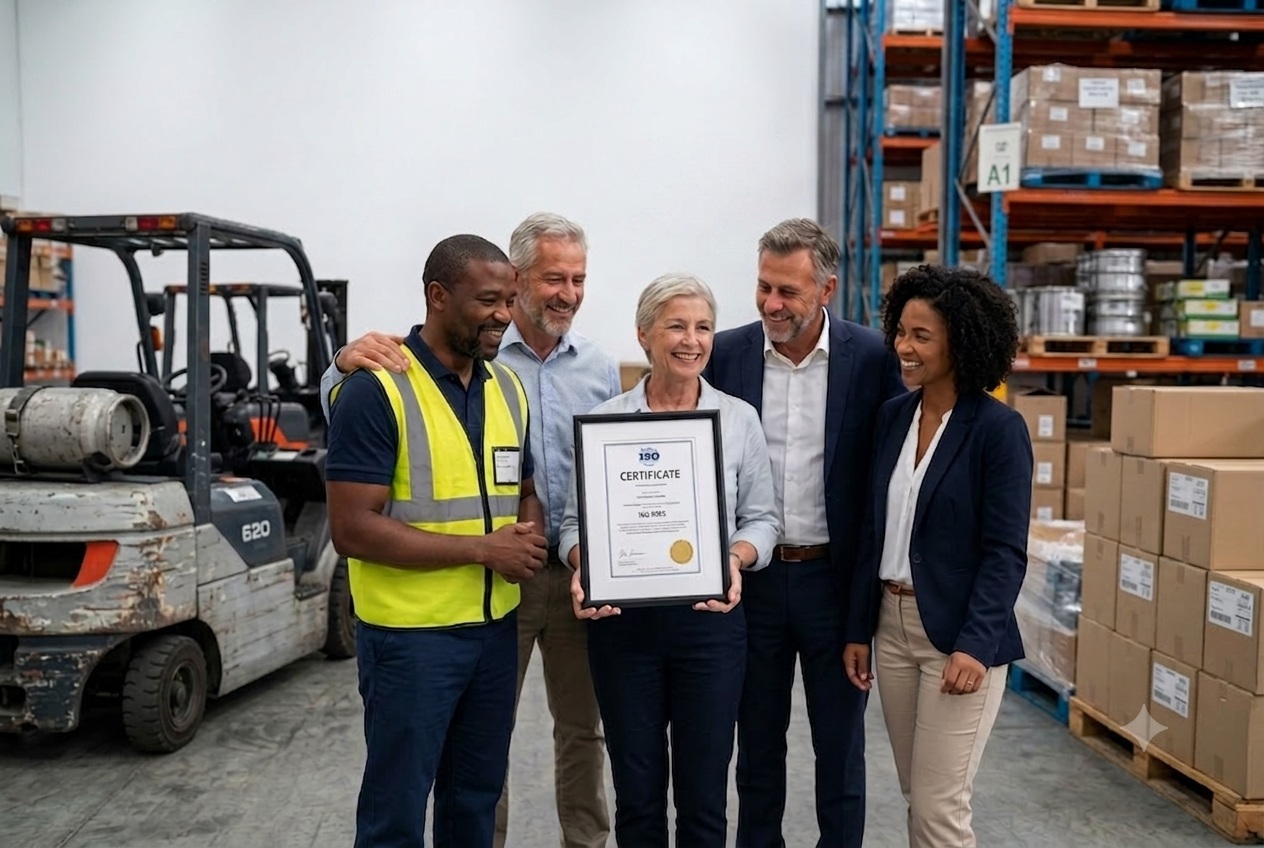


100% certification success rate
Certification guaranteed — and a system your team runs the business with, not around.
Built on the Total Management Control System™ — adapted from management principles used by Fortune 500 companies.
The title “ISO specialist” is unregulated. Unlike surgeons or engineers — whose credentials require years of formal education and real-world accountability — most ISO practitioners are self-certified through short auditor training programs.
That training teaches conformity, not management. It’s designed to verify compliance. Not to design, lead, or run a business.
They are specialists in checklists — not value creation. They lack an understanding of how organisations actually create profit and sustain performance.
“They design systems for the auditor — not for the CEO.”
We’ve audited 200+ certified organisations. The pattern is clear:
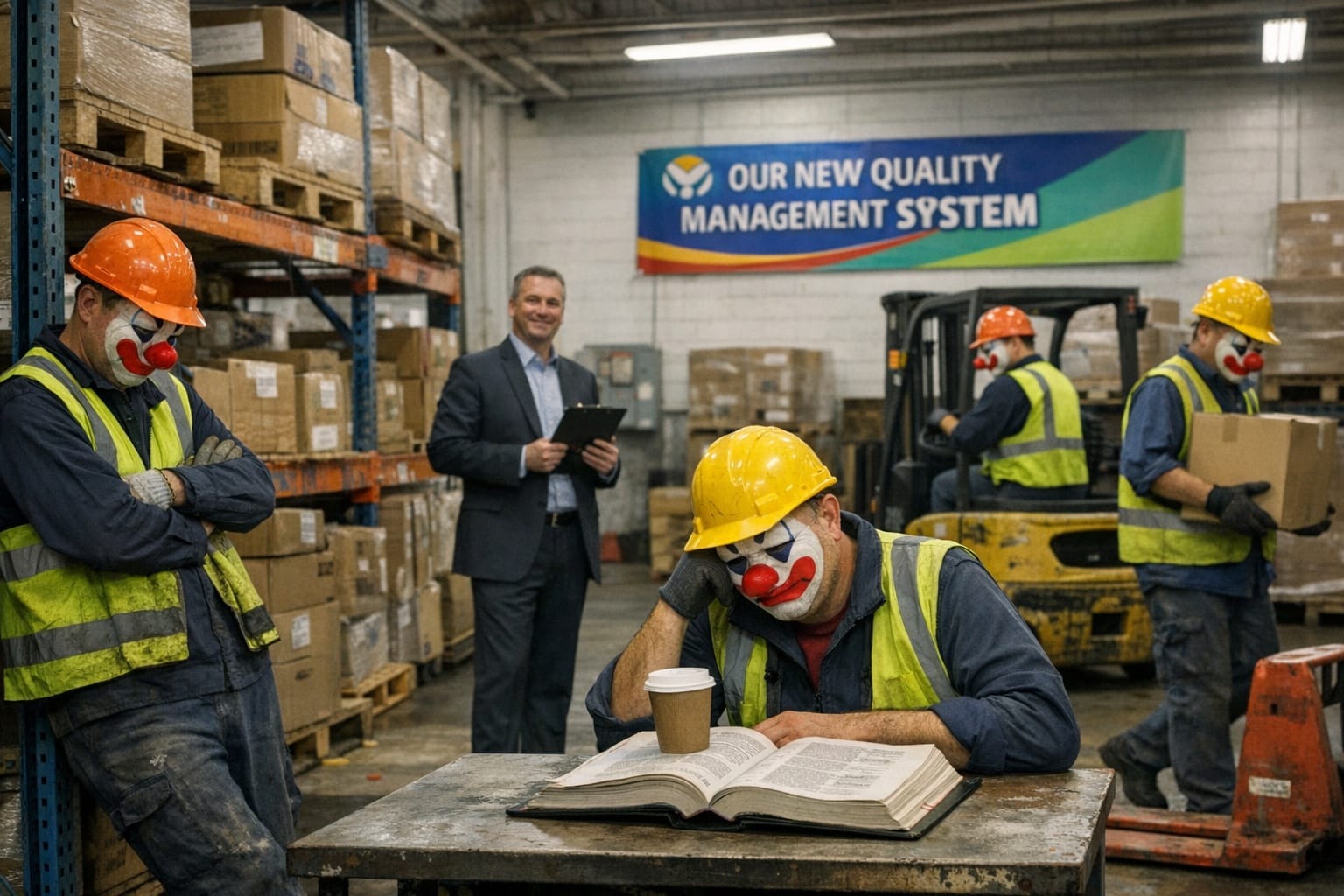
What gets built is not a management system — it’s a compliance machine that consumes time, people, and money without improving results.
- You got the certificate — not the control.
- The system survives for the audit, not for the business.
- Costs rise year after year with minimal return.
- Leadership can't see which processes create or destroy profit.
- Decision-making remains inconsistent across teams.
“ISO that disappears into how you already work.”
Most ISO 9001 implementations deliver compliance and stop.
We design systems that leadership actually uses to run the business.
ISO requirements are integrated into a disciplined management framework that governs priorities, decisions, and results — not documents.
This is not an ISO “system” that lives on the side. It is the system by which the business is managed.
What changes when the system is built for leadership:
- ISO 9001 becomes embedded — requirements are absorbed into how you already manage. No parallel "ISO work."
- Leadership decisions drive the system — not audit checklists or consultant preferences.
- Strategy connects to daily operations — priorities cascade from top to bottom with clear accountability.
- Accountability is built in — not chased after problems surface.
- Financial impact is visible — revenue drivers and cost leaks are identified, measured, and reviewed.
How Does Your Management System Actually Score?
Nordic Wind Services: How a wind farm operations company got ISO certification that actually addressed their unique technical and safety requirements
The company provided operations and maintenance services for onshore and offshore wind farms totalling 850MW capacity across the UK, Ireland, and Germany. Their work combined complex technical requirements (predictive maintenance, SCADA integration, blade inspection) with significant safety risks (working at height, high voltage, remote access). An infrastructure fund preparing to refinance their wind portfolio required ISO 9001 certification from all service providers as part of due diligence. Previous conversations with ISO consultants had been frustrating — the consultants didn't understand renewable energy operations and proposed generic approaches that wouldn't address sector-specific requirements. Leadership was sceptical that ISO could be implemented in a way that actually helped their business rather than creating parallel documentation with no operational value.
Before writing any procedures, we invested time understanding wind farm operations: how maintenance was planned and executed, how SCADA data informed decisions, how safety and quality interconnected, what drove turbine availability. The quality system was designed specifically for renewable energy O&M. Procedures addressed actual activities: condition-based maintenance, blade inspection protocols, gearbox oil analysis, high voltage switching procedures. Quality objectives measured what mattered: turbine availability, first-time-fix rate, safety incident correlation. The system integrated with existing safety management rather than duplicating it. Quality audits examined whether safety procedures were followed as part of quality verification. The result was one coherent management system, not parallel bureaucracies.
- ✓ ISO 9001 certification achieved in 18 weeks
- ✓ Investor due diligence requirements satisfied
- ✓ Turbine availability improved from 95.8% to 97.3%
- ✓ 22% reduction in unplanned downtime
- ✓ Zero major nonconformities in certification audit
"Every consultant before this one wanted to give us generic templates and force our operations into their framework. This approach was completely different — they learned our business first, then designed a system that actually addressed our challenges. The availability improvement alone justified the investment. And we have a quality system our technical teams actually use because it was built for what they do."
* Based on typical client implementations
“Most ISO implementations I audit are compliance exercises — systems built to satisfy auditors, not to run the business. This approach is different. The management system becomes how leadership actually governs performance. When I audit these clients, I’m not reviewing documentation created for me — I’m reviewing how the business operates.”

Luis Pertence
Certification Body Certifier –
Obsequentia Pty Ltd
No. It replaces fragmented efforts with a single management rhythm that reduces wasted work and rework.
No; you’ll reorganise existing roles around routines and guidelines — the system reduces rework and admin.
Implementation investment depends on organisation size and complexity. Contact us for a specific proposal. What we can tell you: the system typically pays for itself within 12 months through reduced waste, rework, and management overhead.
We map KPIs to P&L line items and use simple before/after comparisons with conservative attribution rules.
Yes. The system is built audit-ready from day one and we coordinate certification readiness with your chosen registrar.
No. We work with organisations that want a management system leadership will actually use — not just a certificate. If you’re looking for the cheapest option or a template you can fill in yourself, we’re not the right fit.
Organisations bidding major contracts, regulated suppliers, exporters.
Mid-market & multi-site businesses ($1M–$150M revenue) needing leadership clarity.
Guidelines are decision rules for leaders (what to prioritise), not exhaustive step-by-step procedures.
No. We design the system leadership governs; operational teams execute under new decision rules and routines.
Daily routines surface non-adherence immediately and the system makes remediation visible to leadership.