Client Case:
- Construction — Civil Earthworks & Excavation
- NSW — Sydney Metropolitan Area
- Micro (1-5)
- First Certification
- $1M-$5M
From Documentation Package to Management System: How a Sydney Excavator Got What Three Consultants Couldn’t BuildThree consultants. Two documentation packages quoted. None trained to design a management system. TMCS built what their formation never covered.
The Situation
Company Background
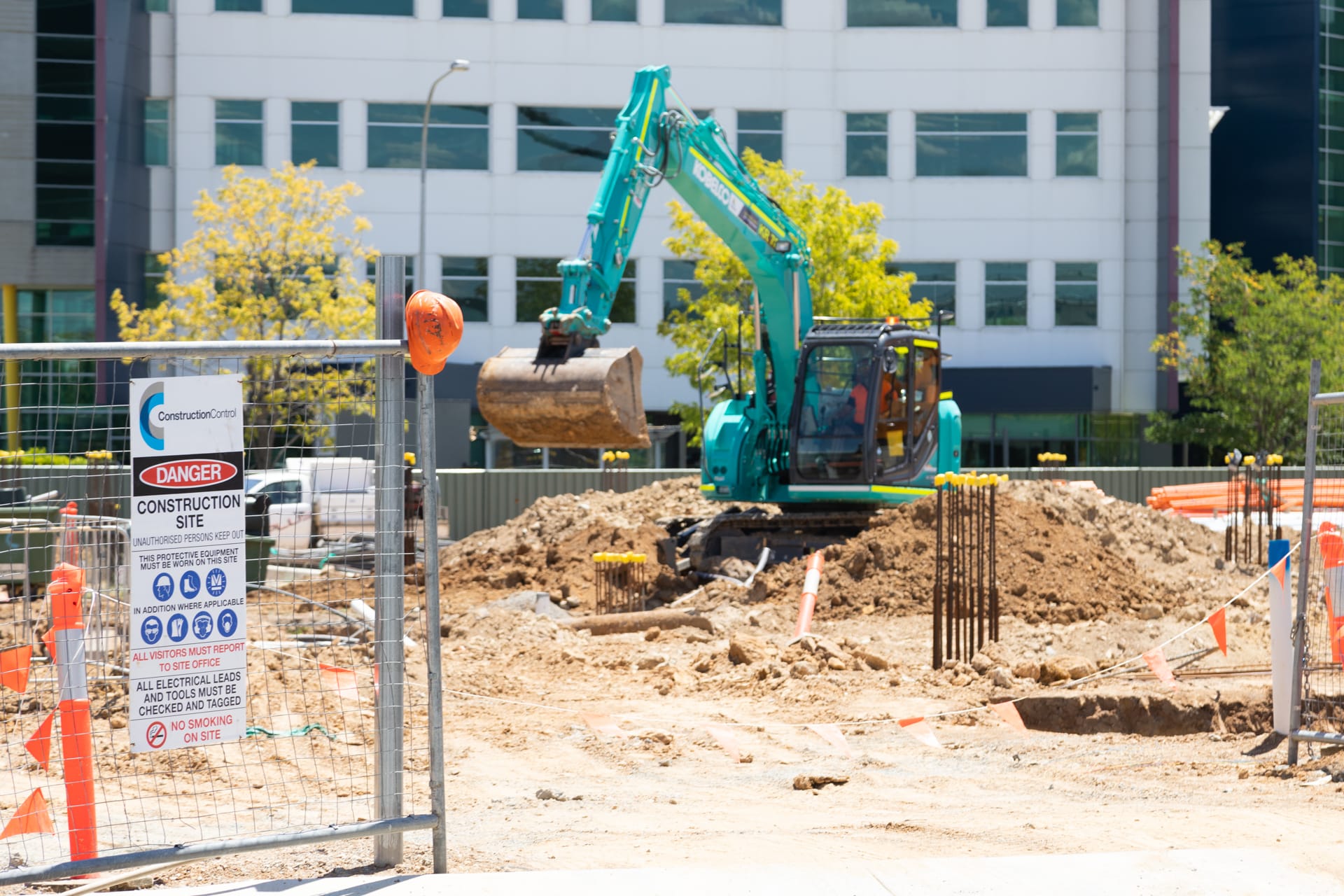
Byrne Excavation. Four people on the payroll — Sean Byrne and three office staff handling estimating, scheduling, and accounts. On the ground, two subcontractor crews running across Sydney — residential subdivisions, drainage works, small-scale earthmoving. Founded by Sean in 2011. Revenue around $1.5 million. Profitable. Growing by reputation and word of mouth.
Sean wanted government contracts. Local council infrastructure work. NSW state road subcontracting. Bigger jobs, longer pipelines, better margins. Every tender required ISO 9001 certification. He called three consultants.
Two offered the same thing: a documentation package. Templates, a procedures manual, an internal audit checklist. Certificate in eight weeks. Both consultants held lead auditor certificates — the standard 5-day Exemplar Global course that qualifies someone to check whether a system conforms to requirements. Neither had ever been trained to design a management system, architect processes, or build organisational controls. They offered what their formation equipped them to build: documents that mirror the ISO standard’s clause structure. Sean almost signed.
Then he described his actual problem. Neither consultant had an answer for it.
Internal Context
Sean ran everything. Every morning he decided which subcontractor crew went where. When a crew hit unexpected rock, the foreman called Sean. When a council inspector flagged a compaction test, they called Sean. When a subbie did not show, Sean scrambled for a replacement. When both jobs needed the hired excavator on the same day, Sean decided. When a quote was due, Sean priced it. When a safety incident happened, Sean drove to site.
He could not take a day off. He had not taken a holiday in three years. Twelve or more phone calls per week from subcontractor foremen needing decisions that should have been theirs to make. His three office staff processed paperwork — they did not manage operations. The business had no management system. It had Sean. A documentation package would give him a certificate and a folder on the shelf. It would not solve this — and the consultants he spoke to were not trained to see why.
Market Context
NSW government infrastructure spending was growing. Council contracts, state road subcontracting packages, and subdivision works all required ISO 9001 as a prequalification gate. Sean was locked out of every tender — not because his subcontractors could not do the work, but because he lacked the certification to bid.
Competitors with certification were winning contracts Sean knew he could deliver better. The pipeline was there. The capability was there. The market access was not. And every consultant Sean could find in Australia offered the same product: a documentation package. Templates structured around ISO 9001 clauses, written to pass an audit, designed by someone whose highest professional qualification was a week-long course in checking conformity. In the UK, a management systems consultant might hold an MSc and Chartered Quality Professional status. In the US, a Master of Engineering in Quality. In Australia, there is no university pathway. The consultants available to Sean were products of that gap.
Risks and Opportunities
Main Risk/ Opportunity:
Locked out of government infrastructure pipeline — and every available consultant could only offer documentation packages, not the management system Sean actually needed
Other Risks and Opportunities:
Every NSW government infrastructure tender requires ISO 9001 — zero tenders submitted to date
Competitors with certification winning contracts Sean could deliver at higher quality
Government work requires scaling to three or four subcontractor crews — no consultant Sean spoke to could address the scaling problem
Three years without a holiday — owner burnout risk threatening business continuity
Context Barriers
Main Barrier:
Every consultant available held a 5-day auditor certificate — trained to check systems, not design them. None could diagnose or solve Sean’s actual problem
Other Barriers:
Two consultants quoted documentation packages that mirror ISO clause structure — not Byrne Excavation's actual operations or value stream
Neither consultant could explain how the proposed system would reduce Sean's 12+ weekly calls or define authority for subcontractor foremen
No consultant proposed measuring rework cost, defining decision boundaries, or building operational controls — only audit conformity
Australia has no university pathway for management system design — every available consultant learned auditing, not architecture
The documentation packages quoted would produce a certificate in 8 weeks and shelf decoration for the next 8 years
The Intervention
Diagnosis
The two consultants who quoted Sean were not incompetent. They were products of a formation gap. In Australia, becoming an ISO consultant requires completing a 5-day Exemplar Global lead auditor course — or a TAFE Diploma of Quality Auditing built around auditing units and compliance electives. Neither pathway covers management system design, process architecture, statistical methods, cost of quality, or organisational control. The consultants offered what they were trained to build: a documentation package structured around ISO 9001 clauses. Templates. A procedures manual. An internal audit checklist. Certificate in eight weeks.
That output mirrors the standard — not the business. A clause-structured procedures manual would describe what an auditor checks, not what Byrne Excavation needs to control. It would not define Sean’s authority versus his responsibility. It would not establish measurable guidelines for the business. It would not give subcontractor foremen defined decision boundaries. It would not make rework cost visible. It would not build anomaly treatment into site operations. It would produce a folder on the shelf and a logo on the letterhead — and Sean would still be taking twelve calls a week while trying to scale from two crews to four for government work.
Sean’s real problem was not certification. It was that his business had no management architecture. Authority was concentrated in one person. No measurable definition of success existed. No mechanism for decisions to happen without the owner. And no consultant in Australia — trained in a week-long auditing course — was equipped to see that, let alone fix it. The formation gap is not just a professional development issue. It is the reason most ISO implementations produce shelf decoration instead of management systems.
Phase 1: Strategic Level - Management by Guidelines
- Weeks 1–3
Sean stopped managing activities and started managing results — four strategic guidelines with measurable control items replaced gut feel
We started where no documentation-package consultant starts: does the leader know the difference between their authority and their responsibility? Sean had authority over his means — subcontractor crews, hired machines, methods — but had never defined what he was responsible for in measurable terms. No 5-day auditor course covers this distinction. No clause-structured template produces it.
We defined the business. Not a mission statement for the wall — a business definition. Products: completed earthworks to specification, on programme, within budget. Clients: residential developers, commercial builders, and now government agencies. Four markets: customers, financial, labour (subcontractors — hard to find reliable ones in Sydney), and community.
From this, Sean established four strategic guidelines for the year. Win first government contract within 12 months — control item: government tenders submitted per quarter, target minimum four, current state zero. Reduce rework cost below 2% of revenue — control item unknown at baseline because nobody was measuring it. Reduce Sean’s direct involvement in daily site decisions to zero within six months — control item: site-to-Sean calls per week, current state around twelve. Zero serious safety incidents — control item: lost-time injury frequency rate.
Four guidelines. Not fifteen. Each with a number, a frequency, a target, and a gap. The gap is the problem — and a problem is not bad news, it is a call to action. Sean’s non-delegable responsibility: own these four guidelines, review them quarterly, and not delegate the system to his office staff or a consultant. None of this appears in a documentation package. None of it comes from a 5-day course. It comes from management system design — the discipline Australia’s formation gap leaves uncovered.
Phase 2: Tactical Level - Guideline Deployment
- Weeks 4–7
Each subcontractor crew became a managed unit with defined authority and control items — deployed through dialogue, not mandate
Each subcontractor crew is a management unit — a small operation inside the business. Foreman, operators, labourers. Each crew has its own suppliers, its own deliverables, and its own client interface. The fact that they are subcontractors, not employees, changes nothing about the management architecture. We did not hand the foremen a copy of Sean’s guidelines and tell them to comply. That is a mandate, not deployment.
Each subcontractor foreman sat with Sean and defined their unit. Crew mission: deliver excavation stages to specification, on programme, with zero rework and zero safety incidents. Their control items — derived from the strategic guidelines through dialogue: rework hours per project stage, programme variance in days, daily pre-start completed, and number of calls to Sean for decisions.
Their authority: which machine to use on site, how to sequence the dig, when to bring in additional labour, how to handle a schedule change within scope. These are the means — they own them. Their responsibility: the control items. These are the results — they answer for them.
This was the moment the business changed. Two subcontractor foremen who previously called Sean for everything now had defined decision boundaries. If the decision fell within their authority, they made it. If the result fell outside their target, they acted on it. Sean’s phone went quiet. A documentation package does not produce this. A procedures manual does not define authority boundaries. This requires management system design — the capability that a 5-day auditor course does not teach.
The office — Sean’s three staff handling estimating, scheduling, and accounts — got the same treatment. A third management unit with its own mission, products, clients, and control items. Monthly reviews: each unit presents their control items trending up or down, on target or off. Not a report to Sean — a nested review.
Phase 3: Operational Level - Daily Work Routine Management
- Weeks 5–12
Subcontractor crews wrote their own standard procedures, ran visual management boards on every site, and treated anomalies as system signals
This is where 90% of the work happens. Below the line. SDCA — follow the standard, check the results, correct deviations.
Standard procedures were written by the people who do the work — not by consultants, not by Sean, not by the office. Site excavation setup, compaction testing and failure response, materials receiving, stage closeout for inspection, and pre-start checklists that operators actually use. The subcontractor foremen and their operators drafted them based on how they actually work, then refined them until everyone agreed. A standard is a documented commitment used repeatedly by the people who do the function. If they did not write it, they will not follow it. A documentation-package consultant writes procedures in an office and hands them to the site. That is why those procedures end up in a folder on the shelf.
Visual management: each site got a whiteboard — the scoreboard. Programme status, today’s excavation targets, safety observations, open issues. The foreman updates it every morning at pre-start. Anyone walking onto site sees the current state in 30 seconds. The council inspector sees it too — and immediately knows this is not a cowboy operation.
Anomaly treatment separated this from a procedures manual. Before TMCS, every anomaly called Sean. Now: the operator detects it and reports to the foreman immediately. The foreman contains the symptom, investigates whether the standard was followed, and writes the anomaly report. If the procedure was followed and the result was still bad, the procedure needs to change — that is a PDCA trigger, not an operator failure. Sean reviews anomaly reports weekly, not daily, not by phone.
The first month, crews reported 14 anomalies. Sean’s instinct was alarm. Those 14 things were already happening — they just had no names, no owners, and no deadlines. By month three, three chronic problems accounted for 60% of all rework: incorrect survey mark interpretation, compaction failures on clay soils after rain, and miscommunication on cut/fill depths between the office and site. Three PDCA projects. Three updated procedures. Rework cost dropped from unknown to 3.1% in month three, then 1.8% by month five. No documentation package produces this. No auditor-trained consultant designs anomaly treatment systems. This is the difference between a certificate and a management system.
The Results
Outcomes
Outcome Summary:
Byrne Excavation achieved ISO 9001 certification at week 11. Not because someone built a document package — because the system was already running. The auditor walked onto a site and saw the visual management board, the pre-start records, the anomaly reports, the compaction logs. They asked a subcontractor foreman to explain the company’s quality objectives. He pulled out his control item card and explained his targets, his current results, and what he was doing about the gap. The auditor said it was the best-prepared small contractor they had seen.
The two consultants who had quoted Sean documentation packages would have produced a certificate too — probably faster. But it would have been a certificate describing a set of documents, not a system running a business. Sean would have a folder on the shelf, a logo on the letterhead, and the same twelve calls a week. The government contracts that require liquidated damages for late delivery would have crushed him.
Instead: first government tender submitted in month four. First government contract won in month seven — a $180,000 stormwater drainage subcontract for Inner West Council. Rework cost at 1.8% by month five, below the 2% target. Calls to Sean dropped from twelve per week to zero by month six. Subcontractor foremen make every daily decision within their authority. Sean took his first holiday in three years — a week in Queensland. Nothing broke.
Byrne Excavation is now prequalified with two Sydney councils and has submitted its first tender on a NSW state road subcontracting package. The management system that won the certificate is the same system that runs the business. There is no parallel documentation. The certificate confirms the system exists. The results confirm the system works. The formation gap nearly cost Sean both.
Main Outcome:
ISO 9001 certified at week 11, first government contract won at month seven, owner involvement in daily decisions reduced to zero
Secondary Outcomes:
Rework cost reduced from unknown to 1.8% — below the 2% target — with three root causes permanently eliminated
Site-to-owner calls dropped from 12 per week to zero by month six — authority boundaries replaced the owner bottleneck
First government contract won: $180,000 stormwater drainage subcontract for Inner West Council
Prequalified with two Sydney councils, first NSW state road tender submitted
Zero lost-time injuries since implementation — near-misses captured that would have previously gone unreported
Owner took first holiday in three years — one week in Queensland, zero operational disruption
Leadership Outcome:
Sean said the two consultants who quoted him documentation packages were not bad people — they offered what they knew how to build. The problem was that what they knew how to build was not what he needed. Their formation taught them to check boxes, not to design management systems. He needed someone who could diagnose that his business had no architecture — no defined authority, no measurable guidelines, no decision boundaries for his foremen — and build one. The certificate was a side effect of getting the architecture right. His words at month nine: the difference between a documentation package and a management system is the difference between a logo on the letterhead and a business that runs without me on site.
The Statistics That Really Matter
11 weeks
Kickoff to certification
Month 7
First government contract
12 → 0
Owner daily decision calls
1.8%
Rework cost
0
Lost-time injuries
Other Case Studies

Has every consultant quoted you the same documentation package?
They offer what their formation trained them to build: documents that mirror clause numbers. backup.9001.plus designs management systems that mirror your business — strategic guidelines, deployed authority, operational controls. The certificate is a side effect.
Related ISO Management Systems Problems