Client Case:
- Healthcare — Mobility Equipment — Retail, E-Commerce & NDIS Services
- National — All States — Sydney Head Office
- Large (100+)
- Already Certified
- $50M+
From Five Acquisitions to One System: How a $100M Mobility Company Rebuilt Management Control Across Every StateFive acquisitions in three years. Five different operating models. One ISO certificate covering none of it. TMCS unified the business in 14 weeks.
The Situation
Company Background
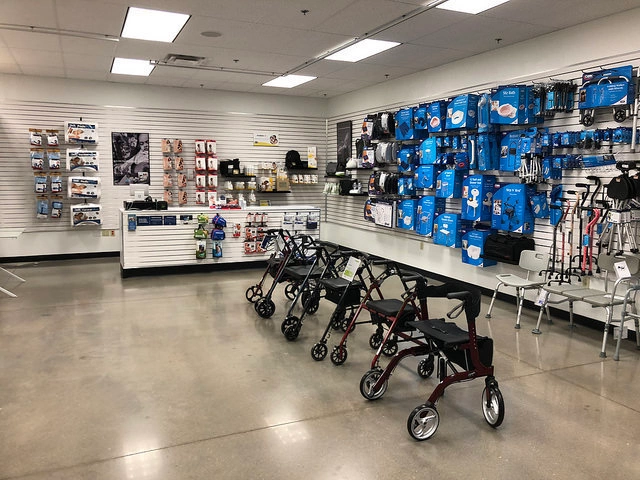
Horizon Mobility Group sells and services mobility equipment across Australia — power wheelchairs, mobility scooters, manual wheelchairs, stairlifts, bathroom and bedroom aids, and vehicle modifications. The business operates through twelve retail showrooms across six states, a national e-commerce platform, three regional warehouses, and an in-home assessment and installation service for NDIS participants.
The CEO founded the original Sydney operation fifteen years ago. Revenue sat around $28 million — stable, profitable, and growing organically at 8-10% per year. Then the board approved an acquisition strategy. In three years, Horizon bought five smaller mobility retailers: two in Queensland, one in Melbourne, one in Adelaide, and one in Perth. Revenue hit $103 million. Headcount went from 85 to 284. The business went from one state, one showroom model, to six states, twelve showrooms, three warehouses, and a national webstore.
The ISO 9001 certificate was still on the wall. It described a $28 million Sydney business. The $103 million national operation that actually existed had no unified management system.
Internal Context
Each acquired business ran its own way. The Brisbane operation processed NDIS orders through a spreadsheet. Melbourne used a CRM the parent company had never seen. Perth still ran paper-based service records. Adelaide had its own supplier agreements at different prices for the same products. The two Queensland businesses — acquired six months apart — had not even been merged with each other, let alone with Sydney.
Customer complaints were rising but nobody could quantify by how much or from where. The quality team in Sydney maintained the ISO documentation for the original operation but had no authority, no visibility, and no capacity to cover five acquired businesses in five states. Returns from the webstore were running at 14% with no root cause data — each warehouse handled returns differently.
The CEO had no dashboard. No unified view of complaints, returns, NDIS compliance, supplier performance, or service delivery across the group. Each state manager sent a monthly report in a different format, covering different metrics, at different times. The board asked the CEO for group-wide quality performance data at every meeting. He could not provide it.
Market Context
NDIS Practice Standards audits were scheduled for three of the acquired businesses within nine months. These audits assess whether disability equipment providers meet participant safety, service delivery, and governance requirements. Failure does not just risk a certificate — it risks the provider registration that allows the business to serve NDIS participants at all. Two of the acquired businesses had never been through an NDIS audit under Horizon’s ownership.
The mobility equipment market was also consolidating. Two national competitors had already completed their own acquisition integrations and were winning NDIS contracts on system maturity — demonstrating unified complaint handling, service tracking, and outcome reporting across their networks. Horizon was bidding against integrated competitors with a fragmented operation.
Meanwhile, the e-commerce channel was growing at 22% annually but generating the highest complaint rate in the business. Product description accuracy, delivery timeframes, and returns handling varied by warehouse. Three Google reviews in one month mentioned receiving the wrong wheelchair configuration. The brand was bleeding online while the CEO had no mechanism to see it, diagnose it, or fix it across three warehouses simultaneously.
Risks and Opportunities
Main Risk/ Opportunity:
ISO certificate covered the original Sydney operation — five acquired businesses running five different systems with no unified management architecture
Other Risks and Opportunities:
Five acquired businesses operating five different quality systems — no unified view of customer complaints, NDIS compliance, or supplier performance
NDIS Practice Standards audit scheduled in nine months — acquired disability equipment providers not aligned to parent system
E-commerce returns running at 14% with no root cause data — each warehouse handling returns differently
Key retail staff in acquired businesses already leaving — imposed head office procedures seen as takeover, not integration
Context Barriers
Main Barrier:
Every consultant proposed rewriting the parent QMS and imposing it on acquired operations — the approach that had already failed twice
Other Barriers:
Two previous integration consultants wrote a single QMS and mandated compliance — acquired teams rejected it within three months both times
Quality team of four maintaining documentation for the original Sydney operation only — no capacity or authority over acquired businesses
Each acquired company had different product lines, different supplier agreements, and different customer service standards
CEO had no dashboard showing performance across all seven business units — each state reported in different formats on different cycles
The Intervention
Diagnosis
Horizon did not have an integration problem. It had a management architecture problem. The ISO certificate was an artifact of the original $28 million Sydney business. It described one operation in one state with one set of processes. The CEO had acquired five businesses but never built the management structure to govern them as one company.
Two consultants had already tried the obvious fix: take the Sydney QMS, rewrite it to cover the national operation, and push it out to every state. Both times, the acquired teams rejected it. Not because they were resistant to systems — they had their own systems that worked for their local operation. They rejected a system designed in Sydney by people who had never walked their showroom floor, never processed an NDIS order in their state, never dealt with their local suppliers. The consultants designed for compliance. The teams needed something that helped them run their business.
The root cause was structural. The CEO was trying to manage a national grid of business units — retail showrooms, warehouses, e-commerce, NDIS services, each operating across multiple states — through a management system designed for a single-site operation. He had authority over his means — the acquired companies, the capital, the brand — but had never defined what he was responsible for in measurable terms across the integrated group. There were no strategic guidelines that every unit answered to. There was no defined relationship between what the CEO needed to see and what each state operation needed to deliver. There was no architecture. There was a certificate from 2019 and a folder of procedures that described a business that no longer existed.
Phase 1: Strategic Level - Management by Guidelines
- Weeks 1–4
The CEO defined one integrated business — products, clients, four markets — and established strategic guidelines governing all seven business units
We started where TMCS always starts: does the leader know the difference between their authority and their responsibility? The CEO had authority over his means — twelve showrooms, three warehouses, a webstore, 284 people across six states, $40 million in annual procurement. But he had never defined what he was responsible for in measurable terms across the integrated group. “Growing the business” is not a control item. “Being the market leader” is not a target. He was managing acquisitions, not results.
We defined the business. Not a mission statement for the boardroom wall — a business definition. Horizon Mobility Group’s products: mobility equipment assessed, supplied, fitted, delivered, and serviced to specification. Clients: NDIS participants, aged care facilities, private purchasers, hospitals, and allied health professionals. Four markets: customers (the people who use the equipment and the organisations that fund it), financial (the board, the bank, the investors who funded the acquisitions), labour (occupational therapists, equipment technicians, retail consultants — specialist roles that are hard to recruit nationally), and community (NDIS Quality and Safeguards Commission, TGA, state fair trading bodies, disability advocacy groups).
From this, the CEO established five strategic guidelines for the year — each with a measurable control item, a target, a current state, and a gap:
Guideline 1: Unify all operations under one management system within 12 months. Control item: number of business units operating under the integrated system. Target: seven (five acquired + Sydney retail + e-commerce/warehouse). Current state: one.
Guideline 2: Reduce group-wide customer complaints by 50% within 12 months. Control item: complaints per 1,000 transactions, consolidated across all channels. Target: 8. Current state: unknown — no unified data existed.
Guideline 3: Achieve 100% NDIS Practice Standards compliance across all registered providers before the scheduled audit. Control item: compliance score per provider. Target: 100%. Current state: unknown for three of five acquired providers.
Guideline 4: Reduce e-commerce returns to below 7%. Control item: return rate as percentage of online orders. Target: 7%. Current state: 14%.
Guideline 5: Reduce acquired-business staff turnover to below 15%. Control item: annualised turnover rate across acquired operations. Target: 15%. Current state: 31%.
Five guidelines. Each with a number, a frequency, a target, and a gap. The gap is the problem — and a problem is not bad news, it is a call to action. The CEO’s non-delegable responsibility: own these five guidelines, review them quarterly, and not delegate the system to the quality team or an integration consultant. This starts at the top or it does not start.
Phase 2: Tactical Level - Guideline Deployment
- Weeks 4–10
Each state operation became a management unit with its own mission and control items — deployed through dialogue, not mandate from head office
The company is a grid. The vertical axis: seven management units — the five acquired state operations, the original Sydney retail and showroom operation, and the national e-commerce and warehouse operation. The horizontal axis: the processes that cut across all of them — procurement, order fulfilment, NDIS assessment and supply, customer service, equipment servicing, and returns handling.
Each management unit is a business inside the business. Each one has its own suppliers, its own products, its own clients, and its own local context. The Melbourne operation serves a different NDIS market than Brisbane. The Perth showroom carries stairlifts that Adelaide does not. The e-commerce warehouse deals with shipping logistics that retail showrooms never touch. Pretending they are identical and handing them identical procedures is why two previous integration attempts failed.
We did not hand the state managers a copy of the CEO’s five guidelines and tell them to implement. That is a mandate, not deployment. Each state manager sat with the CEO and defined their own unit:
Unit mission: what this operation exists to deliver, in its local market, to its specific clients. Their control items — derived from the strategic guidelines through dialogue, not dictation. Brisbane’s complaint rate target accounts for their higher NDIS volume. Perth’s return rate target reflects their different product mix. Melbourne’s staff turnover target recognises they lost three senior technicians to a competitor.
Their authority: which suppliers to use locally, how to staff the showroom, how to schedule NDIS assessments, how to handle a customer complaint within their scope. These are the means — they own them. Their responsibility: the control items. These are the results — they answer for them.
This was the moment the integration worked. Five state managers who had been told what to do by head office now had defined decision boundaries. If a decision fell within their authority, they made it locally. If a result fell outside their target, they acted on it and reported through the review cycle. The CEO stopped micromanaging state operations. The states stopped resisting head office.
The horizontal processes got the same treatment. Procurement became a single managed process with a process owner who had cross-functional authority: negotiate national supplier agreements, manage the approved product list, and track supplier performance across all states. But each state retains authority to source locally within the framework. The NDIS process was mapped end to end — referral, assessment, quoting, supply, fitting, follow-up — with common standards and state-specific variations where regulations differ.
Monthly reviews. Each unit presents their control items — trending up or down, on target or off. Not a report sent to the CEO — a nested review. The CEO opens the strategic review and every tactical result is already inside it. No surprises. No quarterly PowerPoints. No asking each state to compile data in a format they have never used.
Phase 3: Operational Level - Daily Work Routine Management
- Weeks 8–14
Unified standard procedures across all channels with anomaly treatment that feeds the CEO dashboard — written by each team, not imposed by Sydney
This is where 90% of the work happens. Below the line. SDCA — follow the standard, check the results, correct deviations. The default at the operational level is not improvement. It is stability. Run the standard. Check the output. If the output matches the target, the standard is working. If it does not, treat the anomaly.
Standard procedures were written by the people who do the work — not by the quality team in Sydney, not by consultants, not by head office. Each management unit documented its own operational standards based on how it actually works: showroom customer assessment, NDIS quoting and approval, equipment configuration and fitting, delivery scheduling, installation, service and warranty, and returns processing. A standard is a documented commitment used repeatedly by the people who do the function. If they did not write it, they will not follow it. This is why two previous rollouts of Sydney-written procedures were rejected by every acquired team.
The critical difference: all procedures align to common process standards set at the tactical level. The Brisbane showroom writes its own customer assessment procedure — but it must capture the same data points that the NDIS process standard requires, because that data feeds the complaint tracking and compliance reporting the CEO sees in the strategic review. Local execution, unified architecture.
Visual management. Each showroom and warehouse has a dashboard — visible to the team, updated daily. Complaints this week. Returns this week. NDIS orders in progress and their status against timeline targets. Open service requests by age. The state manager sees the aggregated view. The CEO sees the group view. Same data, different scope, nested like Russian dolls.
Anomaly treatment. This is what separated the rebuild from every previous integration attempt. An anomaly is any unexpected occurrence. A wrong wheelchair configuration shipped. An NDIS assessment that missed a participant’s requirement. A stairlift installation that failed the safety check. A supplier delivering out-of-spec product. A customer complaint.
Before TMCS, each state handled anomalies differently. Brisbane escalated to Sydney. Melbourne fixed it locally and told nobody. Perth logged it in a notebook that nobody reviewed. Adelaide blamed the supplier. Now: the team member detects and reports immediately. The state manager contains the symptom — stops the affected process, protects the customer, secures the equipment if safety-related. Then investigates: was the standard followed? Does a standard exist for this situation? If the standard was followed and the result was still bad, the standard needs to change — that is a PDCA trigger, not a people failure.
The first month, the seven units reported 89 anomalies. The CEO’s instinct was alarm. We told him: that is the system working. Before, those 89 things happened and five different states handled them five different ways. Now they have names, owners, deadlines, and root cause categories. By month three, four chronic problems accounted for 62% of all customer complaints across the group: incorrect product configuration at order entry, delivery scheduling failures between warehouse and installer, NDIS documentation incomplete at quoting stage, and spare parts delays from two key suppliers. Four problems. Four PDCA projects. Four updated process standards deployed to every unit that touches the affected process. Complaints dropped 58% by month five.
The Results
Outcomes
Outcome Summary:
Within fourteen weeks, Horizon Mobility Group had one management system governing all seven business units across six states. Not a document package imposed from Sydney — a management architecture where each unit runs its own operation within strategic guidelines set by the CEO and deployed through dialogue.
Customer complaints dropped 58% across all channels within five months. For the first time, the CEO could see complaint data by state, by channel, by product category, and by complaint type — in real time, not in a quarterly PowerPoint compiled by the quality team. Four chronic root causes that had been invisible across fragmented state reporting were identified and eliminated through PDCA projects that updated process standards across every affected unit.
All three NDIS Practice Standards audits were passed with zero corrective actions. The auditors noted that each registered provider demonstrated not just compliance but a management system that connected frontline service delivery to organisational governance — something they said they rarely see even in larger disability service providers.
E-commerce returns dropped from 14% to 6.1%. Three root causes eliminated: product description inaccuracies (standardised across the webstore), warehouse picking errors (standard procedure rewritten by each warehouse team with photo-verified configuration checks), and delivery damage (packaging standard updated through PDCA with the logistics provider).
Staff turnover in acquired businesses dropped from 31% to 12%. State managers reported that the shift from imposed compliance to defined authority was the turning point. Their teams own their management unit — they write their own standards, they run their own reviews, they make decisions within their authority boundaries. They answer for results, not for following instructions written by someone in Sydney who has never met their customers.
The ISO 9001 certificate was updated to cover the national operation. The surveillance auditor reviewed the system across three states and said it was the most coherent multi-site management system they had assessed in the healthcare equipment sector. The certificate now describes the actual business — not a $28 million Sydney operation that no longer exists.
Main Outcome:
One management system across all states. Customer complaints down 58%. NDIS audit compliance 100%. CEO sees every unit in real time.
Secondary Outcomes:
Customer complaints reduced 58% across all channels — root cause data visible by state, channel, product category, and complaint type for the first time
NDIS Practice Standards audit passed with zero corrective actions — all acquired disability providers fully aligned
E-commerce returns dropped from 14% to 6.1% — three root causes eliminated through PDCA across all warehouses
Staff turnover in acquired businesses dropped from 31% to 12% — teams own their management unit, not complying with imposed procedures
CEO dashboard showing all seven business units in real time — strategic review contains every tactical review nested inside it
Leadership Outcome:
The CEO said he spent two years trying to integrate five acquisitions by pushing Sydney’s system onto every state. Two consultants, two failures, and a staff turnover rate that was destroying the businesses he had paid to acquire. The rebuild did not give him a bigger manual. It gave him a management architecture — strategic guidelines that he owns and reviews quarterly, seven management units that each run their own operation within those guidelines, and standard procedures written by the people who do the work in each state. He sees every unit’s results in real time through nested reviews. He makes strategic decisions based on data, not based on monthly emails from state managers in five different formats. His board now receives a single group-wide quality performance report that traces from the CEO’s five strategic guidelines down to every showroom, every warehouse, every NDIS provider. The certificate is no longer an artifact of the old business. It describes the company that actually exists.
The Statistics That Really Matter
58%
Complaint reduction
0
NDIS audit corrective actions
14% → 6.1%
E-commerce returns
14
Weeks to unified system
31% → 12%
Acquired staff turnover
Other Case Studies

Growing through acquisition but losing control with every deal?
Horizon Mobility tried twice to integrate five acquisitions by imposing one manual from head office. Both times, the acquired teams rejected it. TMCS builds a management architecture where each unit runs its own operation within strategic guidelines set by leadership. Integration through architecture, not enforcement.
Related ISO Management Systems Problems